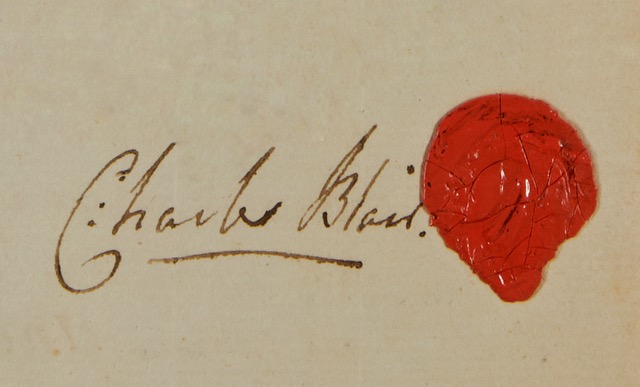
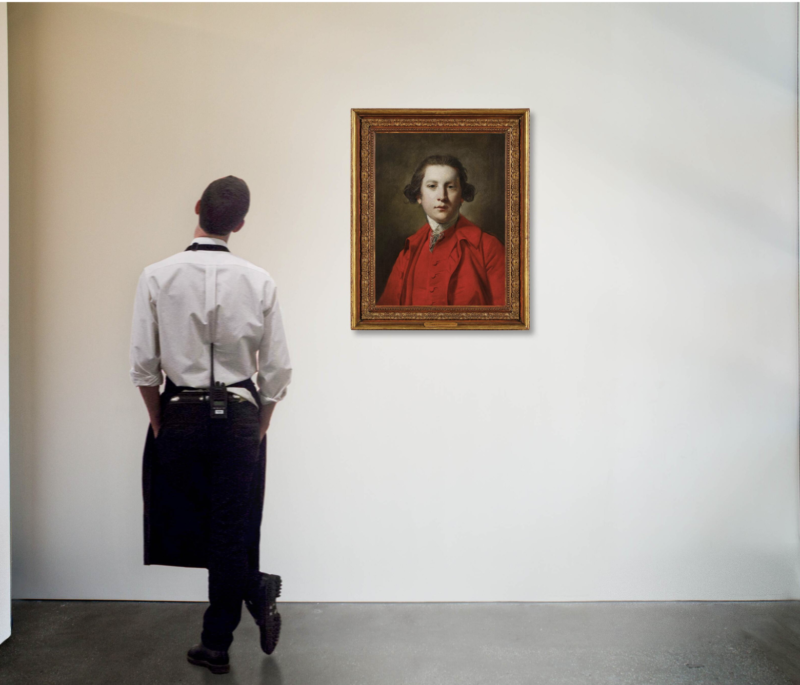
Sotheby’s recently auctioned a portrait of Charles Blair (1743-1802) by Sir Joshua Reynolds. This is the second time the painting has changed hands during the 21st century. In 2008, it sold for US$182,500 and the new owner has just forked out US$230,400 for this 18th century portrait of George Orwell’s great-great-grandfather.
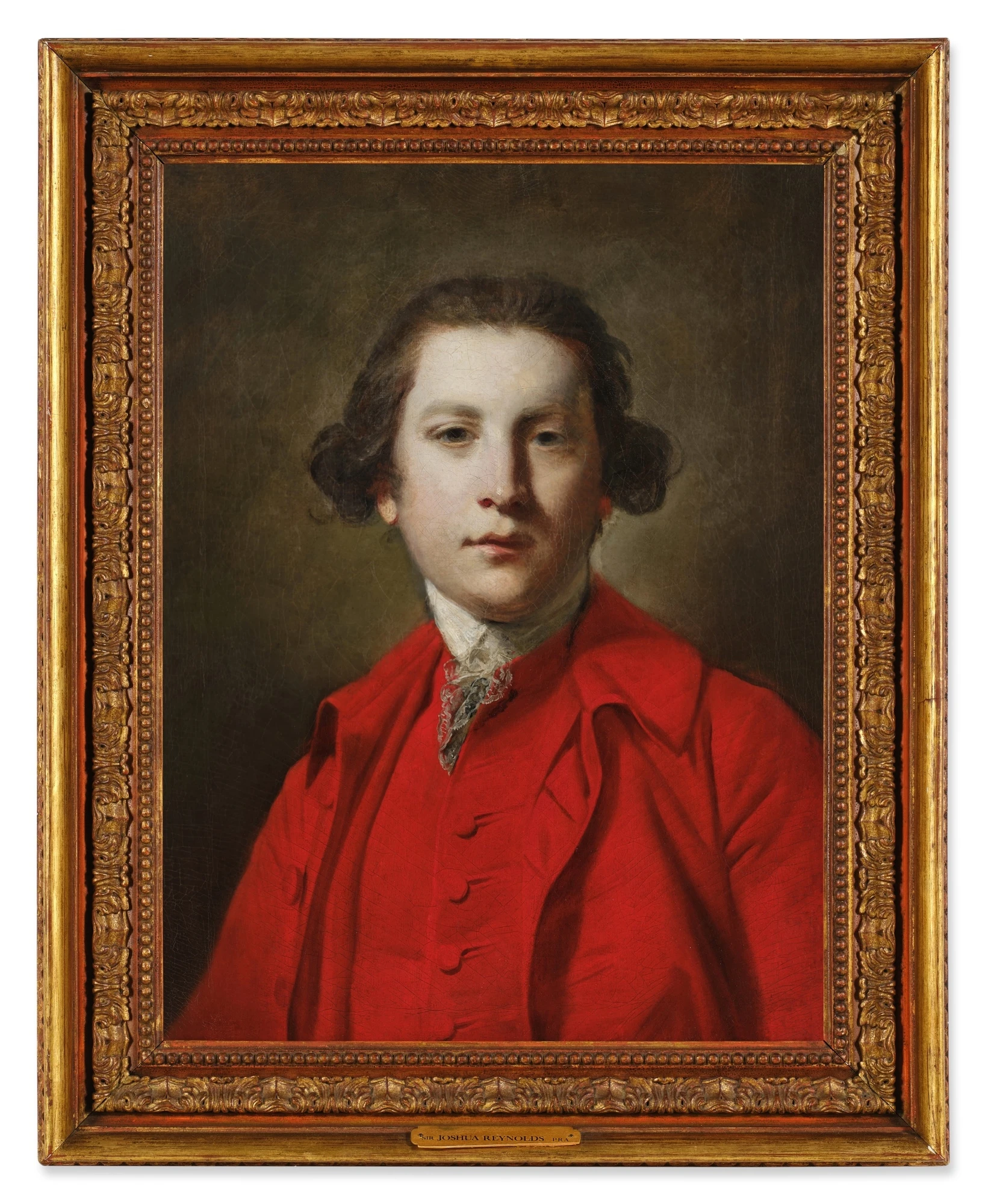
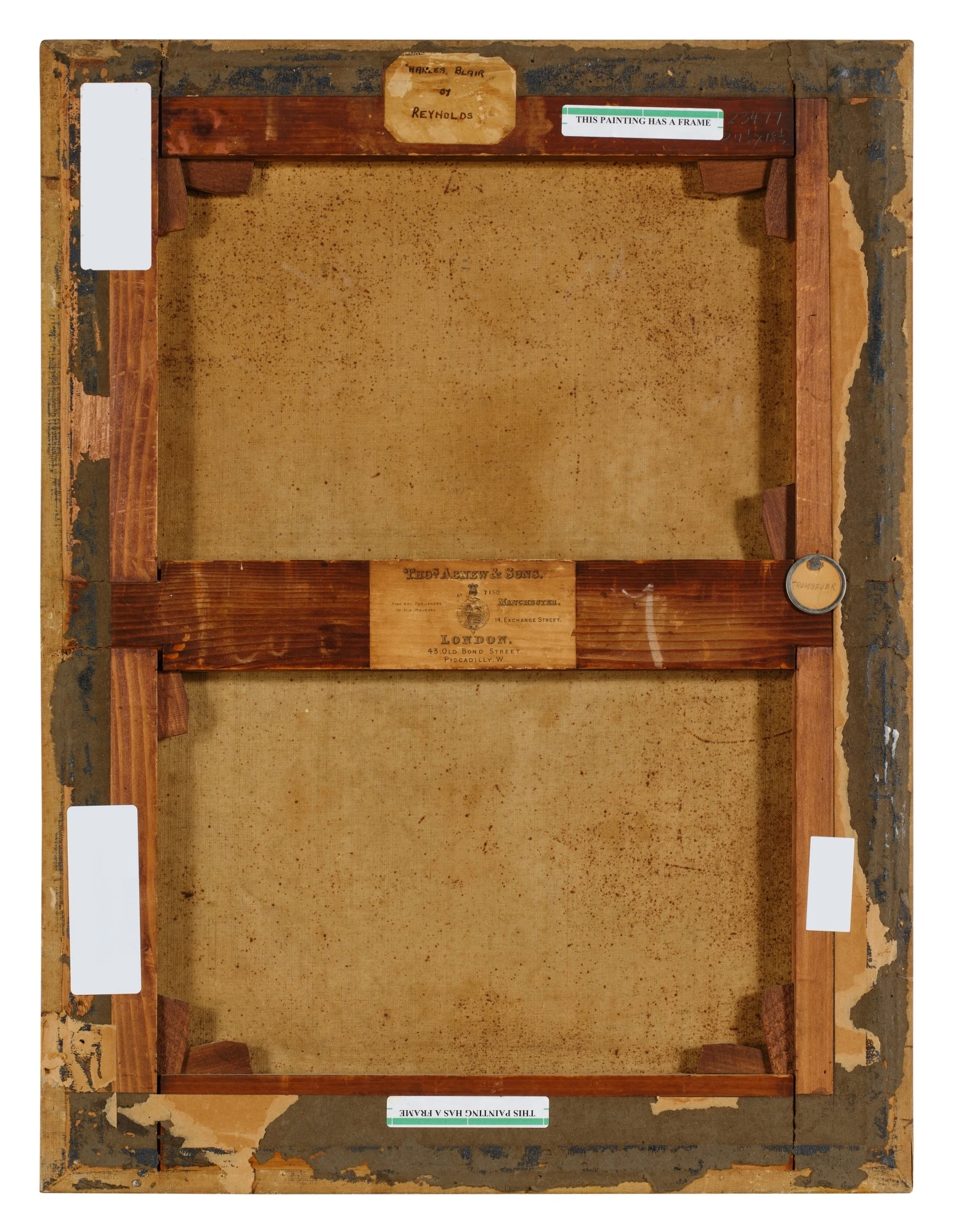
The catalogue included the following information for prospective buyers:
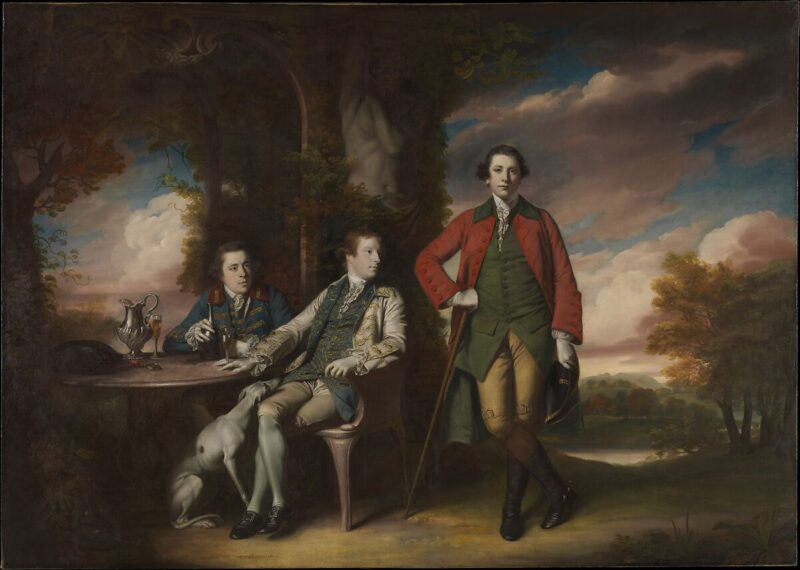
Painted between 1761 and 1764, this striking portrait of Charles Blair likely originated as a highly-finished study for one of Sir Joshua Reynolds’s most ambitious commissions, The Hon. Henry Fane with Inigo Jones and Charles Blair. Today in New York’s Metropolitan Museum of Art, the monumental group portrait is the artist’s largest and most complex conversation piece. Its carefully orchestrated composition and unprecedented scale required an unusually prolonged period of execution; rather than painting the figures together, Reynolds worked from a series of individual studio sittings held over a five-year span, subsequently combining the likenesses into the final composition. The present portrait captures Blair’s features with remarkable immediacy and was almost certainly painted during these preparatory sessions before being completed as an independent work, perhaps by Reynolds himself or with assistance from his studio.
Reynolds’s surviving pocket books document the lengthy process of the commission. Blair (recorded interchangeably as both “Mr.” and “Capt. Blair”) had appointments with the artist beginning in September 1761 and continuing throughout 1762, with further sittings recorded in 1764. 1 The finished group portrait remained in progress for several years before payment of £200 for “Mr Fane Mr Jones & Mr Blair in one Picture” was entered in Reynolds’s ledger on 18 February 1766.
Born at Blandford St. Mary, Dorset, Charles Blair (1743–1802) was the posthumous son of John Blair. In 1762 he married Lady Mary Fane (1741-1813), sister of Henry Fane, thereby forging the family connection that prompted the commission of Reynolds’s celebrated group portrait. Through this marriage Blair became closely associated with one of England’s most influential political dynasties; more than fifty members of the Fane family were elected to the British Parliament from the mid-sixteenth century onward. An absentee landlord, Charles died of fever at the Fane family manor in Lincolnshire in June 1802. His portrait may have passed by direct descent to the Phelips family of nearby Montacute House, who eventually sold the painting at auction in 1929. Blair himself is remembered today not only through Reynolds’s portraiture but also as the great-great-grandfather of the visionary writer George Orwell (born Eric Blair).
1 The pocket book for 1763 is lost.
The auction house based their description on the following sources:
A. Graves and W.V. Cronin, A History of the Works of Sir Joshua Reynolds, London 1899, vol. I, p. 88;
D. Mannings, Sir Joshua Reynolds: A Complete Catalog of His Paintings, New Haven/London 2000, vol. I, p. 91, cat. no. 184; flight. II, p. 297, reproduced fig. 602;
K. Baetjer, British Paintings in the Metropolitan Museum of Art, 1575-1875 , New York 2009, pp. 64-65, under cat. no. 28, reproduced fig. 55.
I contacted Sotheby’s requesting they forward my email address to the new owner. My own research – much of it still on my hard drive – has revealed a great deal more information about the sitter and his wife which would happily be shared. Sadly – and I am familiar with the response from other experiences with auction houses – legislation and guidelines prevent my contact details being provided to the successful bidder.
What follows is a brief summary of new information about Charles Blair which I’d imagine would be of interest to the new owner. This includes links to posts, articles and papers. For regular readers though, read on to see how a “hunting song” has much to tell about Charles Blair and his milieu.
Charles Blair (1743-1802)
“We dined with the Orwells at this house (in Kilburn, North London) one night, prior arrangements being made for sleeping there too, owing to the exigencies of wartime transport. The sitting room, with a general background of furniture dating from more prosperous generations of bygone Blairs, had two or three eighteenth-century family portraits hanging on the walls.” Anthony Powell
One of Orwell’s most treasured personal possessions was a painting of his great-great-grandmother, Lady Mary Blair née Fane (1741-1813) who married Charles Blair at St James’ Church in Westminster on the 13th May 1762. Mary was the daughter of Thomas Fane (1701-1771), the 8th Earl of Westmorland and family oral history posits that her portrait stared down at Orwell from the wall as he banged out essays, news articles, reviews and books on his typewriter. Although the painting has survived, along with an eighteenth century Blair family bible containing a detailed family tree of ‘The descendants of Charles Blair, Esq., and Lady Mary Blair’, the artist is unknown – although I suspect it is by Thomas Beach.
One scroll of parchment, recently unfurled in the National Archives at Kew, helped with several pieces of the jigsaw pertaining to Charles Blair. This included significant information regarding his ancestry; historical societal connections to the British ruling class in Georgian England and Jamaica; education at an elite institution; subsequent military career; his early years prior to marrying Lady Mary; possible reasons why Eric Blair, his great-great-grandson, was at a farm in Kent for the 1921 census; and, offers some tantalising connections to giants of British literature. This document provided further evidence of the political and personal connections between the Pitt family and the Fanes/Blairs/Drapers.
Sitting on my hard drive are letters written to Thomas Fane (from around the time his daughter married) concerning Charles’ behaviour. The letters are quite coded but appear to be about drunkenness and poor treatment of servants. He struck one. The behaviour of his own son, Charles Blair (1776-1854) was far worse – including flogging “all the Prize Negroes in his service in a most cruel manner” and even shooting one man – and became a public scandal.
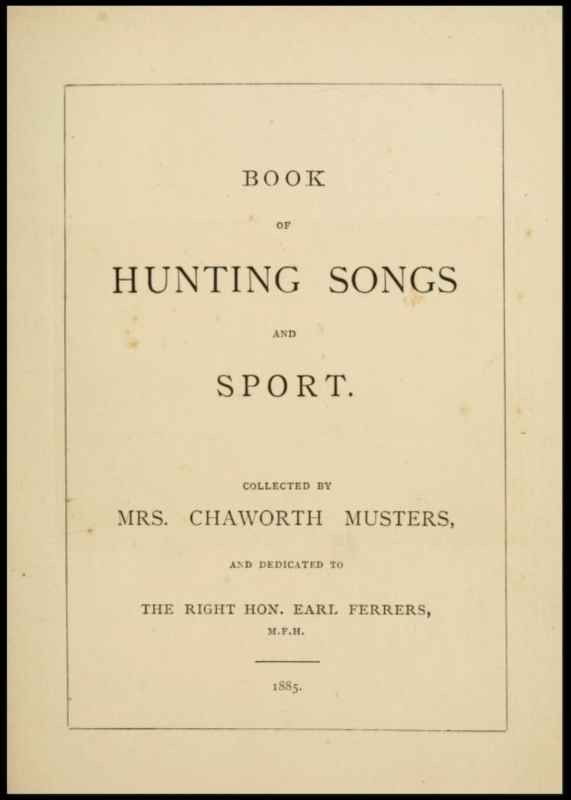
Hunting Songs and Sport (1885) includes an interesting “imitation or parody of an Irish hunting song” mentioning Lady Mary, Charles and his friends. Forsten (sic) is a small village in Dorset, just four miles north of Dorchester. The footnotes provide important contextual clues.
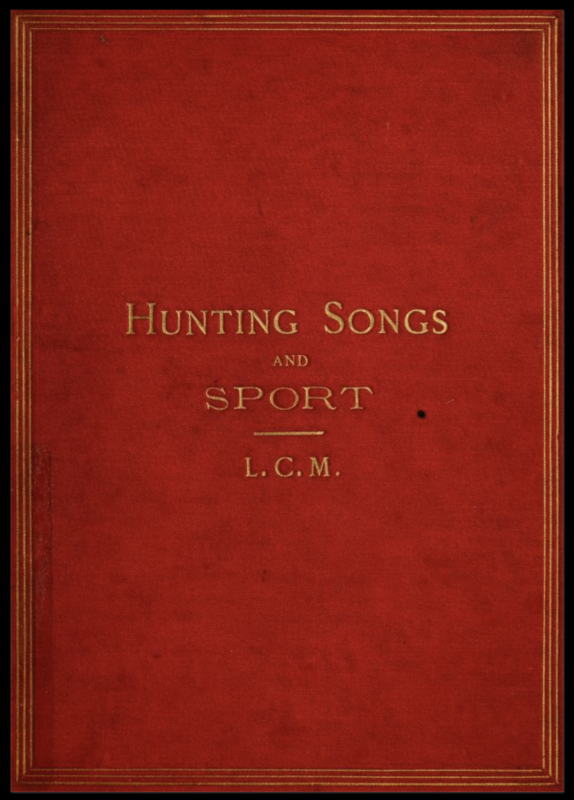
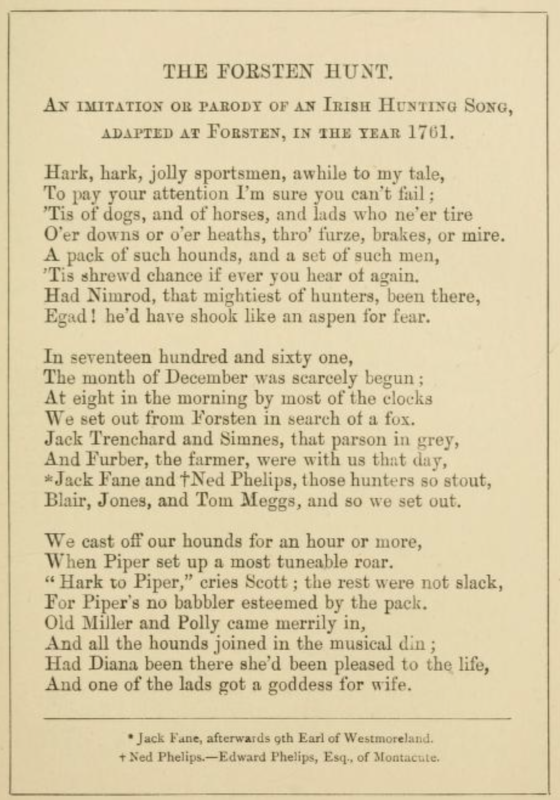
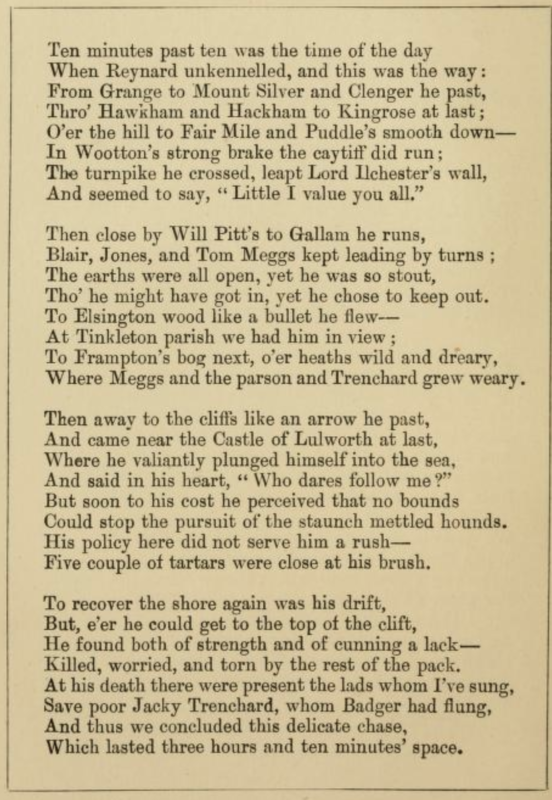
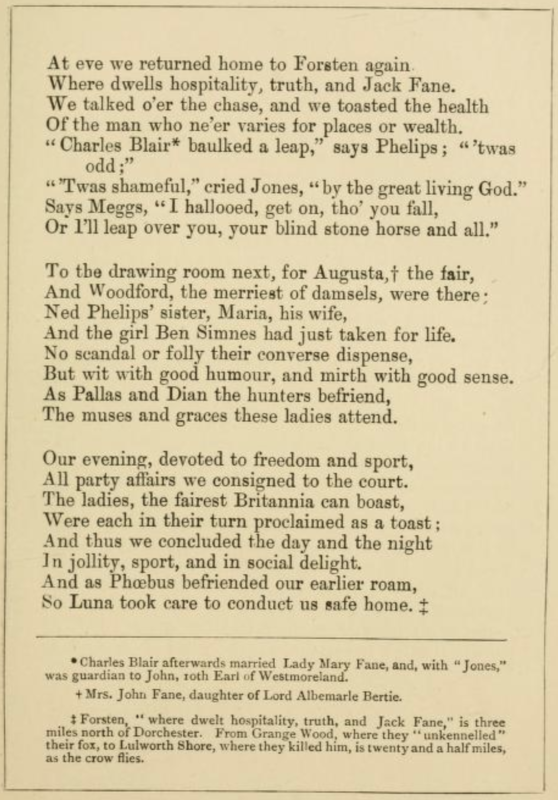
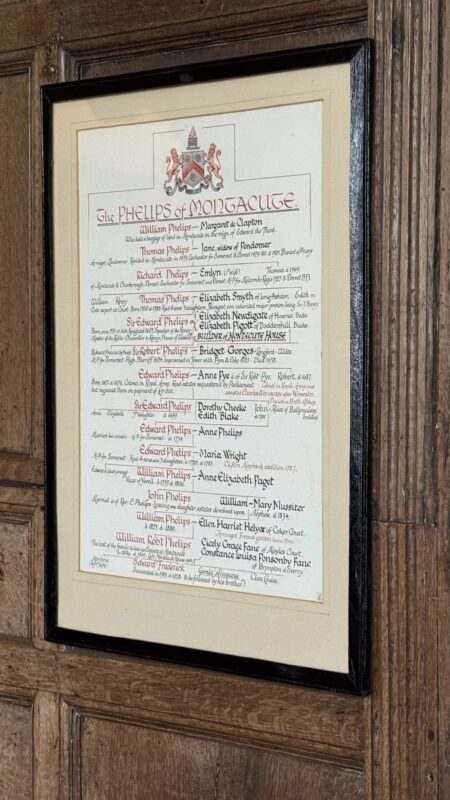
Considering that the portrait in question was originally the “Property of Gerard Phelips, Esq., removed from Montacute House, Somerset” is is interesting to note “Ned Phelips – Edward Phelips, Esq, of Montacute” referenced in the song, along with Charles’ brother-in-law, “Jack Fane, afterwards the 9th Earl of Westmorland“. The Phelips family seat, Montacute House, is nearby to Brympton d’Evercy, one of the most impressive of the Fane family estates. I visited both last year and have a folder of letters, marriage documents, diary entries and newspaper articles which reveal the connections between the Phelips, Fane & Blair families.
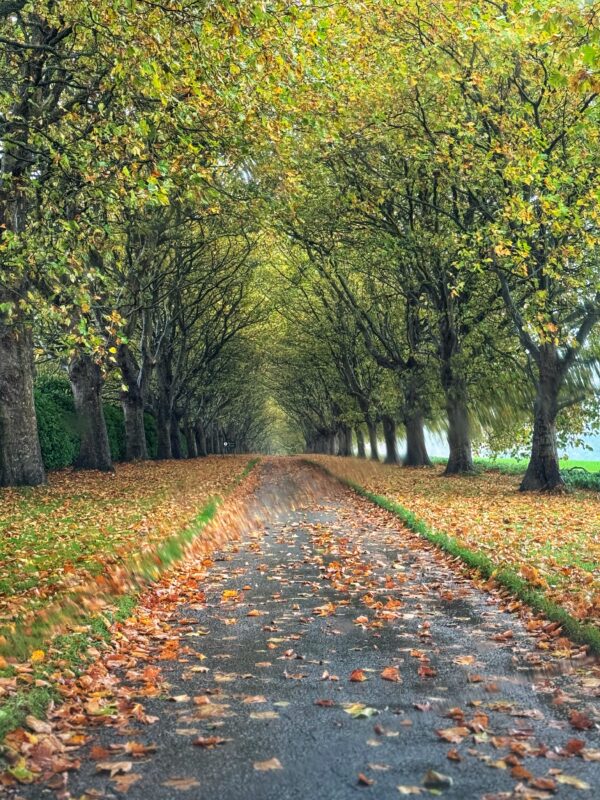
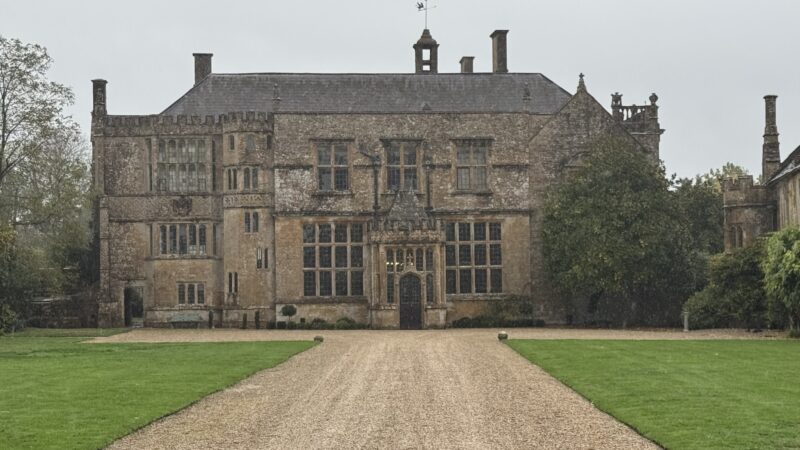
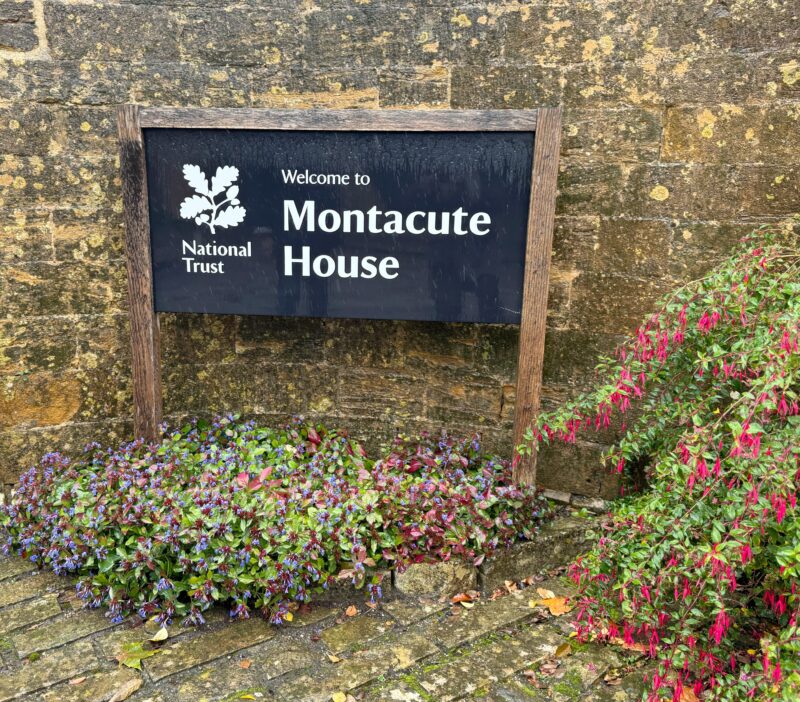
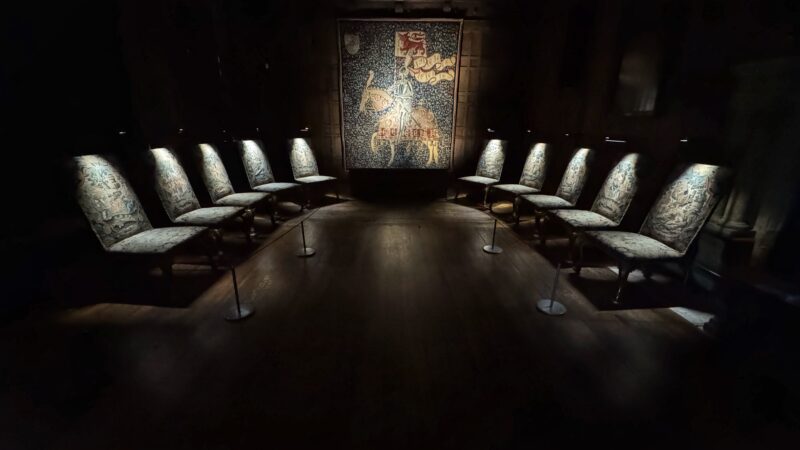
The “Jones” mentioned in the hunting song is Inigo Jones (1738-1788) from Reynolds’ group portrait, ‘The Honorable Henry Fane with Inigo Jones and Charles Blair’ (1766). John Fane, the 10th Earl of Westmorland, whose guardians were Jones and the Blairs, became a significant patron for their sons.
The current edition of George Orwell Studies carries my paper, ‘Blair’s Hut and the Romantic Alps’, which explores unexpected connections between these great-great-grandparents, an iconic Alpine hut and Mary Shelley’s gothic novel, Frankenstein. The essay cites correspondence between Lady Mary and her physician about treating her husband’s gout and quotes other sources suggesting Blair was fond of claret:
… a little hut which Mr. Blair, an English gentleman, whose claret hounds and fortune had run so fast in Dorsetshire that he himself was obliged to quit England, had built as a shelter against a storm or to preserve his wine from the sun on his frequent excursions to Chamouny. This is dignified with the inscription Château Blair. The paysans call it the Château de Montanvert, and sometimes the Château de folie (Yeld 1918: 75-76).
Probate and other official records, newspaper articles, personal correspondence, portraits and diaries are rich sources for the wealthy, landed 18th century aristocrats. Charles and Lady Mary’s circle of friends, acquaintances & influential family members has occupied me for some years. Only in the last twelve months have their connections with Sir Charles Blagden (1748-1820); John Penn (1760-1834); Richard Pulteney (1730–1801); Henry Temple, second Viscount Palmerston (1739–1802); Sir George Thomas (c.1748-1815); Richard Wynne (1744-1798) revealed themselves to me. There is much more to discover from these sources and interconnections.
So What?
Often my Orwellian friends and acquaintances ask why I have spent so much time researching the writer’s ancestors (surnames including: Fane, Michel, Ayscough, Swymmer, Batson, Draper, Halliley, Limouzin, Hare, Ratttray and Blair). There are many reasons including:
- While grappling with Orwell’s prejudice against the Scots, I was drawn into a fascinating web of ancestral connections which continues to reward investigation. Every step of the way it has become apparent that Orwell knew much more about his family tree than previously understood.
- The extensive number of errors in all Orwell biographies (and his ODNB entry) where his ancestors are mentioned which need to be corrected.
- Eileen Blair’s letter (1936) written about the time she married Orwell, is pretty much the only written evidence of the family’s interest in their ancestry (besides the tree at the front of the family bible) but it led me to understand that researching ancestral portraits would be instructive:
“We are staying with the Blairs & I like it. Nothing has surprised me more, particularly since I saw the house which is very small & furnished almost entirely with paintings of ancestors. The Blairs are by origin Lowland Scottish & dull but one of them made a lot of money in slaves & his son Thomas who was inconceivably like a sheep married the daughter of the Duke of Westmorland (of whose existence I never heard) & went so grand that he spent all the money & couldn’t make more because slaves had gone out. So his son went into the army & came out of that into the church & married a girl of 15 who loathed him & had ten children of whom Eric’s father, now 80, is the only survivor & they are all quite penniless but still on the shivering verge of gentility as Eric calls it in his new book which I cannot think will be popular with the family.” Eileen has muddled some information herself (it was Charles Blair who married into the aristocracy) but one cannot help but admire the accuracy in her description of Orwell’s grandfather as a “sheep”.
Reverend Blair (1802-1867). Photograph courtesy of Mark Sutton - Orwell himself was obsessed with the history and one of his biographers noted how “keenly aware” he was of “his Blair ancestry – the procession of ghostly fore-bears, their names inscribed in the Blair family Bible inherited from his father, an oil painting of Lady Mary Blair and a set of leather-bound volumes once owned by his great-uncle, Captain Horatio Blair, to which he became sentimentally attached”. If you re-read Nineteen Eighty-Four, it is striking to consider how much time Winston Smith, the protagonist, spends grappling with what truly happened in the past. Most of Orwell’s novels employ source material from his own ancestry.
- Many of Orwell’s friends and family (Anthony Powell, Julian Symons, Humphrey Dakin, Tosco Fyvel, Paul Potts and Richard Rees) described him in various ways as a figure from a bygone age. The novelist Anthony Powell viewed Orwell as, in many ways, “a Victorian figure”. However, much closer friends, especially those who knew him before he assumed his famous pseudonym understood the now largely forgotten world of the Victorian and Edwardian era Anglo-Indians was the one Orwell inhabited – or of the Georgian, 18th century essayists. It is no coincidence that Jonathan Swift was so important to Orwell throughout his life.
- George Orwell is a paradoxical figure. Friends reported that he called himself “a tory anarchist” but never really understood if he was jesting or not. His wife Eileen wrote to a friend in December 1940 with an amusing insight into The Lion and The Unicorn (1941) suggesting her husband was “explaining how to be a Socialist though Tory”. It is notable that he listed it, just before he died, as one of the books never to be reprinted. It has always struck me as somewhat bemusing and paradoxical that a “democratic Socialist” who affected proletarian dress would have this painting of his aristocratic great-great grandmother (and other ancestors) on the wall.
- Studying Orwell’s life and work is a very useful primer for understanding 20th century history. Learning about his ancestors has deepened my appreciation of British history stretching back to the 12th century. More significantly, it seems increasingly obvious that Orwell’s ancestry was a decidedly important influence on his outlook and work.
Many of Britain’s most illustrious artists and their protégés painted Orwell’s ancestors besides Sir Joshua Reynolds: Thomas Frye (1710-1762); Thomas Gainsborough (1727-1788); Sir Nathaniel Dance-Holland (1734–1811); George Romney (1734-1802); Thomas Beach (1738-1806); Ozias Humphry (1742-1810); Sir Henry Raeburn (1745-1806); Philip Reinagle (1749-1833); Sir Thomas Lawrence (1769-1830).
It is a complex inheritance. These paintings, along with the gilded homes where they hung, were almost always funded by absentee landlords enriched from the sugar and rum produced on their plantations in Jamaica by enslaved people.
How much did Orwell know?
Eileen’s letter quoted above provides a good clue but I have never known what to make of the fact that a week prior to formal employment at the BBC, Orwell played a small part in a radio play exploring the abolition of slavery by the British Parliament:
Slave Owner: (Blair) Come here! You ! Adam ! You’d better jump a bit faster than that when I call you. Didn’t I pay twelve hundred dollars for you? You belong to me … me … do you understand.° Do you see this fist of mine? Hard as stone with knocking down niggers. Do you hear, me° you black nigger? Now then take this whip and flog that woman … that’ll drive your silly religion out of you …
Slave (man): Hen. Excuse me, mas’r, I can work night and day, but don’t ask me to flog a woman ….’t aint right, mas’r …
Slave-owner°: (Blair) What, you black beast … telling me what’s right to do?° You low animal ! We’ll have the cows answering back next. I’ll show you what’s right. Here, Simon, hand me that cowhide whip …
Orwell’s father, Richard W Blair (1857-1939) was the first generation of Blairs not to profit financially from slavery since 1699 but he worked for almost 40 years organising the growing and distribution of opium for the British empire. The language employed in the play is appropriately brutal, and one can only speculate about his conversation with the cast who performed it. Did Orwell acknowledge the role the Blairs played in the slave-trade or other imperial economic pursuits to these peers?
The roll call of Orwell’s ancestral surnames (1698-1833) is almost exclusively of families who profited from the immoral trade, none more so than gouty Charles Blair (1743-1802).
My investigations into Orwell’s ancestors continues with more archival and site visits planned in England, Scotland and Jamaica during January 2027.
REFERENCES
Blair, Mary Lady, “Correspondence with Richard Pulteney”, The Linnaean Society of London, 1777-1780
Davison, Peter, The Lost Orwell: Being a Supplement to the Complete Works of George Orwell, Timewell Press, 2006
Fyvel, T.R, George Orwell: A Personal Memoir, Weidenfeld and Nicolson, 1982
Baetjer, Katharine, British Paintings in The Metropolitan Museum of Art, 1575-1875, Yale University Press, 2010
Dreaper James, Pitt’s ‘Gallant Conqueror’, London and New York: I.B. Tauris, 2006
Mannings, David, Sir Joshua Reynolds: A Complete Catalogue of His Paintings (Volumes 1 & 2), New Haven: Yale University Press, 2000
Moore, Darcy, “Orwell’s Ancestors & Robert Southey”, Darcy Moore’s Blog, 2024. Available online at https://www.darcymoore.net/2024/08/19/orwells-ancestorsrobert- southey/
Moore, Darcy, “Dear Charoux: Revealed – Orwell’s 13 letters to his artist friend”, George Orwell Studies, Vol. 9, No. 2. 2025. pp 91-105
Moore, Darcy, “One Scroll of Parchment”, Darcy Moore’s Blog, 2026. Available online at https://www.darcymoore.net/2026/04/03/one-scroll-of-parchment/
Moore, Darcy, “Blair’s Hut and the Romantic Alps”, George Orwell Studies (2026) Vol. 11, No. 1, 2026. pp. 38-53
National Archives (UK), ‘Blair v Drake: Bill and Answer, Court of Chancery’, C 11/204/18. Available online at https://discovery.nationalarchives.gov.uk/details/r/C10423204
Powell, Anthony, George Orwell: A Memoir, Atlantic Monthly CCXX, October pp 62-68, 1967
Orwell, George, A Clergyman’s Daughter, The Complete Works of George Orwell Volume 3, London: Secker & Warburg, 1997
Orwell, George, Burmese Days, The Complete Works of George Orwell Volume 2, London: Secker & Warburg, 1997
Orwell, George, Keep the Aspidistra Flying, The Complete Works of George Orwell Volume 4, London: Secker & Warburg, 1997
Orwell, George, Coming Up For Air, The Complete Works of George Orwell Volume 7, London: Secker & Warburg, 1997
Orwell, George, Nineteen Eighty-Four, The Complete Works of George Orwell Vol. 9, London: Secker & Warburg, 1997
Orwell, George, All Propaganda Is Lies: 1941–1942, The Complete Works of George Orwell, Volume 13, London: Secker & Warburg, 1998
Orwell, George, Our Job is to Make Life Worth Living: 1949-1950, The Complete Works of George Orwell, Volume 20, Davison, Peter (ed.) London: Secker & Warburg, 1998
Orwell, George (2013) A Life in Letters, Davison, Peter (ed.) London: Liveright
Yeld, George (ed), “Chamouni in 1780 and 1786”, Alpine Journal, Vol. 32, No. 217, February 1918. pp 75-76

Discover more from Darcy Moore
Subscribe to get the latest posts sent to your email.