“To see what is in front of one’s nose needs a constant struggle.” George Orwell
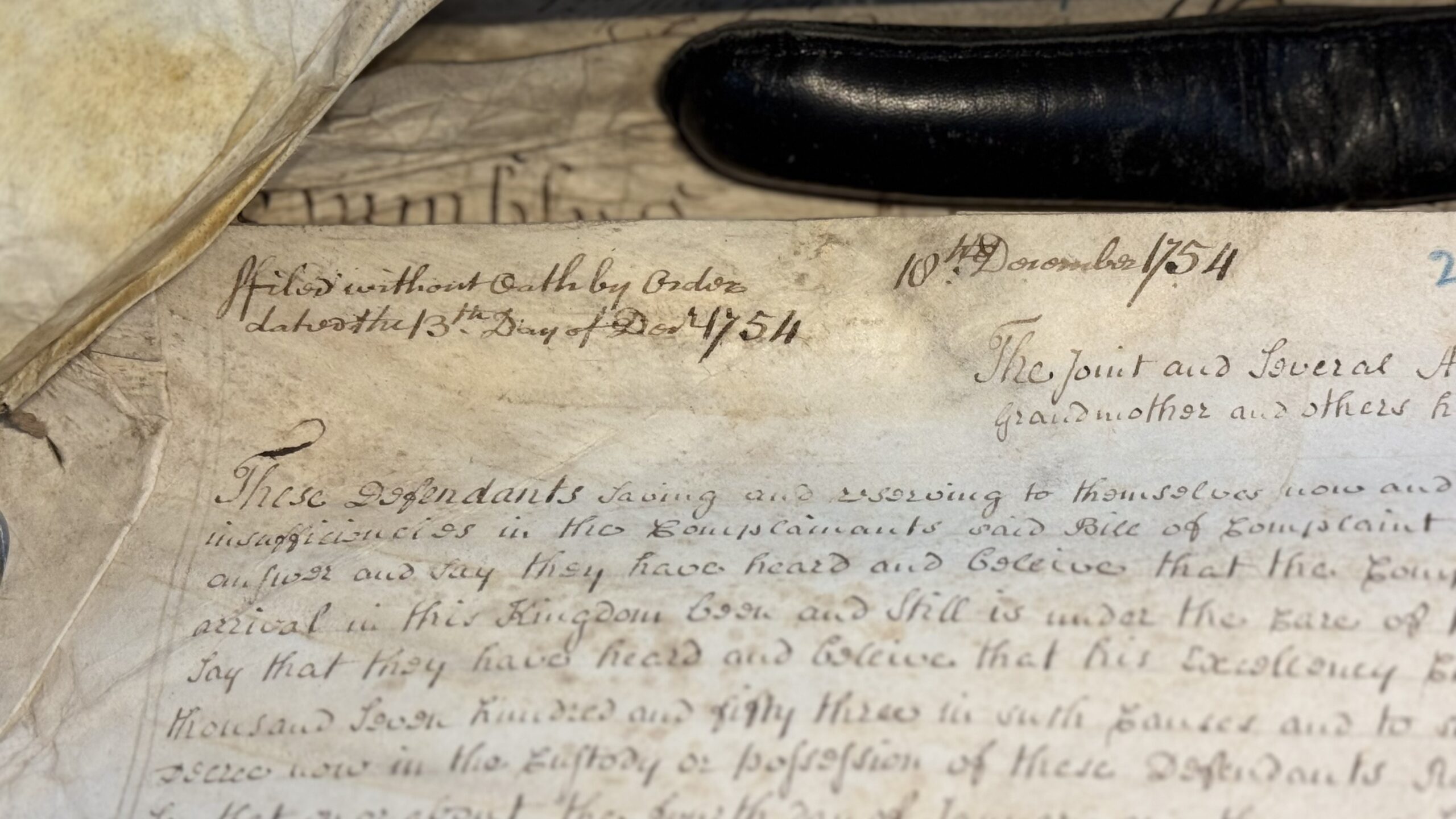
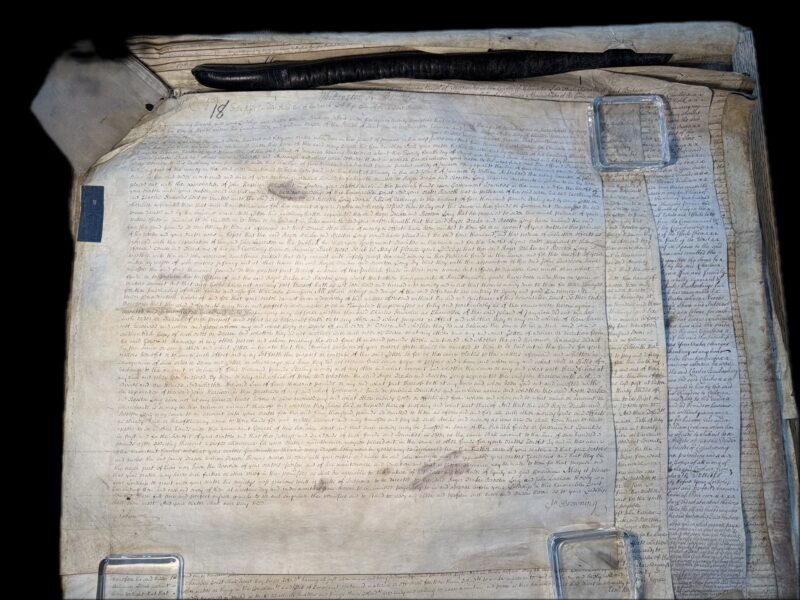
The information wrestled from the record of an 18th century Chancery suit (Blair v Drake 1754) involving Orwell’s great-great-grandfather has been crucial for unlocking some previously closed research doors.
This one scroll of parchment helped with several pieces of the jigsaw pertaining to Charles Blair (1743-1802) including significant information regarding his ancestry; historical societal connections to the British ruling class in Georgian England and Jamaica; education at an elite institution; subsequent military career; his early years prior to marrying Lady Mary Blair née Fane (1741-1813) in 1762; possible reasons why Eric Blair, his great-great-grandson, was at a farm in Kent for the 1921 census; and, offers some tantalising connections to giants of British literature.
In Chancery procedure, the bill (often called a bill of complaint) was the initial pleading filed by the plaintiffs. It sets out the facts of the grievance or wrong alleged and what is sought from the Lord Chancellor. The answer was the formal written response of the defendants to the bill where they admitted or denied the allegations, provided their version of events with evidence or explanations. The language, reflecting the procedural norms of equity litigation in the Court of Chancery during the mid-18th century (and illegible handwriting) made this parchment a challenging document to transcribe.
This Chancery suit (December 1754) followed earlier litigation in Jamaica during the preceding year. Governor Charles Knowles, acting as Chancellor, ordered that £5,600 Jamaican currency (£4,000 sterling) from the estate of Charles Blair’s deceased father be remitted to London and invested for the child’s benefit. The funds, together with proceeds from sugar consignments, were entrusted to merchants Roger Drake and Beeston Long, with oversight from John Harrison. The bill, brought by Blair’s English guardians, the Draper family — his grandmother and three uncles—alleges that the merchants failed to comply with the decree. Instead of investing in the minor’s name, they placed funds in their own names, refused full disclosure, and claimed commissions. In their answer, the defendants admit receiving and investing the money in government annuities but argue this was prudent given Blair’s infancy. They denied wrongdoing, asserting their entitlement to expenses but also expressing willingness to honour their financial duty to Blair.
An overview of the names listed in the document reveals unique insights into the period and may assist the reader digest a rather complex family narrative.
Plaintiffs & Defendants
- Mary Draper née Harrison (1690-1764) was Charles Blair’s grandmother. This is significant new information as it has unravels the mystery of his mother’s maiden name and much besides.
- Charles Blair (1743-1802) was a minor born in Jamaica. His father John Blair (1712-1742) died on the 22nd December 1742. His widow, Mary Blair née Draper (1719-c.1752), remarried on the 1st January 1744 to Thomas Ayscough (1710-c.1753). He and his new wife had a child, Grace Harrison Ayscough (1745-1777) who was born in Jamaica (often children were give the maiden name of a grandmother as a middle name). She subsequently married into the Michel family who were significant patrons of the Blairs for more than a century (patronage which was instrumental in Orwell’s grandfather’s position as a clergyman at Milborne St Andrew in 1854).
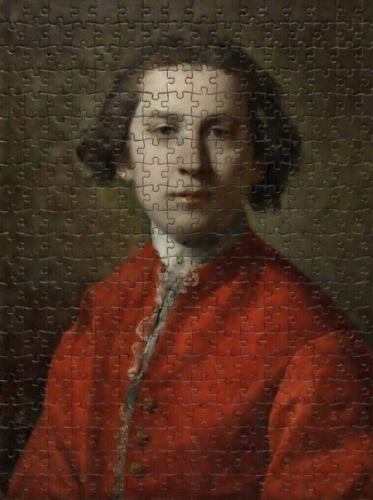
- William Draper (1721-1787) “esq of St James Westminster, Middlesex” was the military hero Lieutenant-General Sir William Draper KB and Mary Draper-Blair-Ayscough’s brother. He was educated at Bristol Cathedral School and won a scholarship to Eton as a King’s Scholar (1733-1740), then continued to King’s College, Cambridge. Draper joined the army and was an Ensign in a foot regiment that fought at the Battle of Culloden. He raised the 79th Regiment of Foot to serve in the army of the East India Company during the Seven Years’ War and was famed for capturing the Spanish Colony of Manila in the Philippine Islands in 1762. He enjoyed the patronage of Pitt the Elder. Due to her son’s military prowess and support from Pitt, Mary Draper (1690-1764) spent her last years in luxury. He was well-connected to the banking Drummond family.
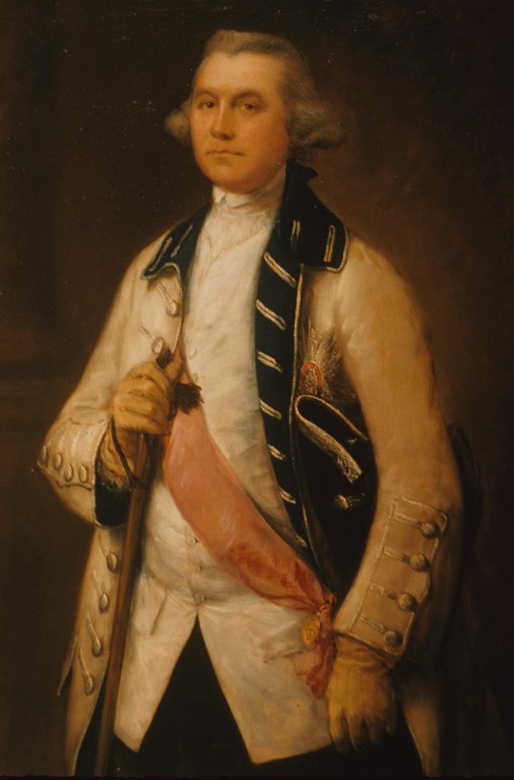
- James Draper (1725-1781) “esq of Chester, Cheshire” was Mary Draper-Blair-Ayscough’s uncle, so Charles Blair’s great-uncle.
- Thomas Moore (1710-?) was Mary Draper-Blair-Ayscough’s brother-in-law and an apothecary surgeon in Bristol.
- Beeston Long (1710 – 1785) was a London merchant with extensive family connections to political power, banking and finance. This included the Pitt and Beckford families. His son, Beeston Long (1757-1820) served as Governor of the Bank of England (1806-08) and Chairman of the London Dock Company. Samuel Long (1638-1683), the patriarch of the Jamaican branch of family had been granted land after serving as an officer in the Cromwellian campaign of 1655 which conquered Jamaica. Beeston Long was a name partner in the prosperous West Indian firm, Drake & Long (originally Long, Drake & Co.) and deputy Governor of the Royal Exchange Assurance Corporation. His cousin, Edward Long (1734-1813), wrote a history of Jamaica (1774) which was unsurprisingly pro-slavery. Beeston Long’s obituary suggests contemporaries admired his achievements:
.“… after a long and well-spent life, during which he endeared himself to the world and to his family, he died revered, lamented, and beloved. His splendid fortune was open, like his heart, to the most liberal contributions of charity. He was governor of several hospitals, a principal promoter of the subscription for the relief of the sufferers in the hurricane at the West Indies; and united the various and more amiable offices of a parent, a Christian, and a citizen of the world!”
The Gentleman’s Magazine, 1785
. - Roger Drake ( – 1762) was also a partner in Long, Drake & Co.
- John Harrison (? – 1755) had a special role in supporting Charles Blair and appears to be another uncle* (Mary “Harrison” Draper). The 1754 document supports this assertion (punctuation is very minimal):
“Mary Draper being now in years may be discharged from the further care of your orator and that your orators said uncles the said James Draper WIlliam Draper Thomas Moore together with your orators said uncle the said John Harrison may be appointed your orators guardians and that they or the major part of them may have the direction of your orators person and of his maintenance and education and that a proper allowance may be made to them for that purpose and that your orator may have such further or other relief in the promises as shall be agreeable to the nature of his case and the Rules of Equity and good conscience.”
*See below for another interesting Harrison connection to Charles Blair’s schooling.
Others named in the document include: William Aikenhead (1700 – 1760); Sir Charles Knowles, 1st Baronet (c. 1704-1777); Philip Lord Hardwicke Lord High Chancellor of Great Britain; Robert Pringle; Archibald Sinclair; Peter Furnell; David Pryce; Martin Read and John Ayscough (1708-1763) the brother of Mary’s second husband, Thomas Ayscough (1710-c1753) and as such, another of Charles Blair’s uncles. He was a controversial planter and Jamaican politician who served as Speaker of the House. He was married to Frances Blair (d. 1763), the sister of John Blair (1712-1743) which explains why Mary married his brother, Thomas. This article (badly in need of updating) explores Orwell’s Jamaican ancestors – Blairs, Ayscoughs and Prices – who were Speakers of the House of Assembly of Jamaica.
The document yielded other treasures, including the unexpected news that Charles Blair was schooled at Eton College, as was his uncle, William Draper. Blair’s own father and children attended Westminster School (with Robert Southey).
Eton College
“The sum of hundred and fifty pounds sterling per annum … I believe I need not inform you that Master Blair the above mentioned minor is now and has been for near these two years last past at Eaton (sic) School…” ‘Blair v Drake: Bill and Answer’, Court of Chancery (1754)
George Orwell was a King’s Scholar at Eton College (1917-1921). It is little known that dozens of his Fane, Michel, Draper & other ancestors were also students at the school. His great-great-grandfather can be added to the list of family members who have attended this privileged British educational institution, founded in 1440.
Charles Blair is listed in The Eton Register as commencing at the school in January 1753. This matches perfectly with the information about his enrolment found in the Chancery suit (dated the 10th and 13th December, 1754). Blair attended for four years.

“Prior” refers to Mrs Prior (c.1737-71) who owned the house at the southeast corner of Keate’s Lane where Charles Blair boarded with other Oppidans. Several members of this family, descended from Edmund Prior, a college porter, feature in the 18th century records of the school. A John Harrison also boarded with Mrs Prior (1755-1762) and it seems likely he is related to Blair via his Draper/Harrison grandmother. The most interesting of the boys who stayed during this period at Mrs Prior’s boarding house with Blair was the writer and literary imitator William Combe/s (1742–1823).
Captain Blair
Prior to reading this document from 1754, it appeared that the Blair family’s political connections in England arose from the Fane (and Michel) families. However, the web of patronage is much more multi-faceted than previously understood now that the connection to the Draper family, especially William Draper, has been made.
Charles Blair (1743-1802) married Lady Mary Fane (1741-1813) at St James’s Church, Westminster in 1762. This was the same year Mary’s father Thomas Fane inherited the title, Earl of Westmorland. This marriage meant that teenage Blair was politically and socially connected to the highest offices in the land. More than fifty members of Lady Mary’s family, the Fanes, had been elected to the British Parliament from the mid-16th century prior to the electoral changes wrought by the Great Reform Act of 1832 breaking their stranglehold on power. It is no surprise that the fashionable portrait painter, Sir Joshua Reynolds, was commissioned to paint many of the family members during the 1760s.
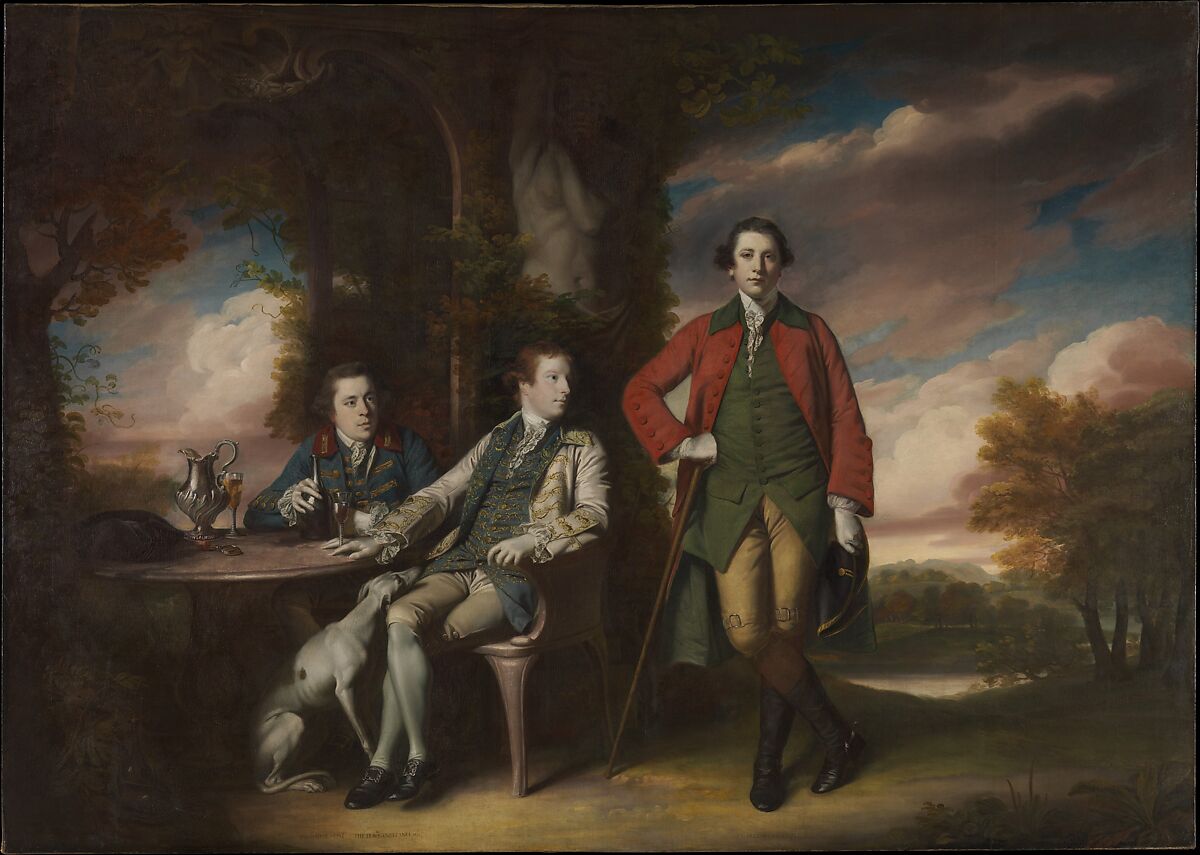
Reynolds recorded the dates his clients attended his studio to sit for their portraits. The largest group portrait commission was of Charles Blair, Inigo Jones and Lady Mary’s brother, Henry Fane (who also attended Eton College). Scholars (Mannings and Baetjer) have assumed the “Mr Blair” and “Captain Blair” noted in his diary is probably the same person but I can confirm this is true (see Cormack who lists a ledger entry “Mr Fane Capt Blair Mr Jones all cancelled” p. 120):
3 March 1761 Capt. Blair at 1pm
6 March 1761 Capt. Blair at 3pm cancelled
10 March 1761 Capt. Blair at 11am
14 March 1761 Capt. Blair at 11am
16 March 1761 Capt. Blair at 2pm
10 April 1761 Capt. Blair at 11am
13 April 1761 Capt. Blair at 2pm
19 Sep 1761 Mr Blair (possibly at 11am)
21 Sep 1761 Mr Blair at 11am (along with Henry Fane and Inigo Jones)
22 Jan 1762 Mr Blair at midday
29 March 1762 Mr Blair at 1pm
1 Apr. 1762 Mr Blair at 11am
5 Apr. 1762 Mr Blair at 12.30pm
6 April 1762 Capt. Blair at 11am
8 April 1762 Capt. Blair at 10.30am
15 Apr. 1762 Mr Blair at midday
20 Apr. 1762 Mr Blair at midday
24 April 1762 Capt. Blair at 11am
26 April 1762 Capt. Blair at midday
29 April 1762 Capt. Blair at 11am
10 May 1762 Mr Blair at 10am (three days before his wedding)
Reynolds’ diary for 1763 is lost.
26 March 1764 Mr Blair at 10am
19 May 1764 Mr Blair at 10am
The group painting was not completed until 1766 (and cost 200 pounds) but Blair also had his own portrait delivered in 1764. Reynolds never produced a portrait of a “Captain Blair” so it is probably safe to assume that they are one and the same. There is a strong connection between William Draper and the regiment Blair joined which only became clear on discovering the ancestral connection.
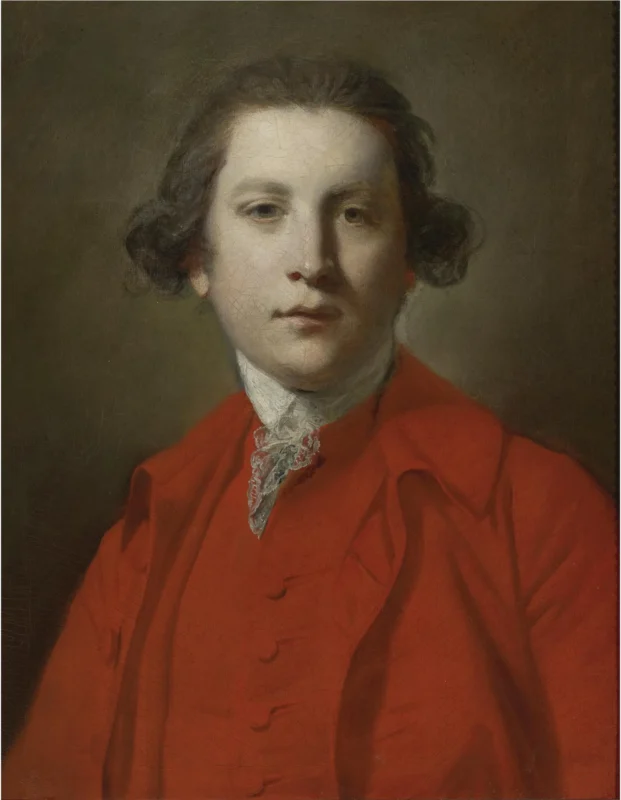
Charles Blair enlisted in the Royal Forresters 21st Regiment of Dragoons a few days after it was raised on the 5th April 1760 by John Manners, the Marquess of Granby. This is particularly fascinating as Granby’s ancestral seat, at Grantham, was only a dozen miles from Fulbeck Hall, Henry Fane’s manor (where he and Charles Blair, nursed by Lady Mary, died of fever in 1802). The Manners family had sold Fulbeck Hall to the Fanes.
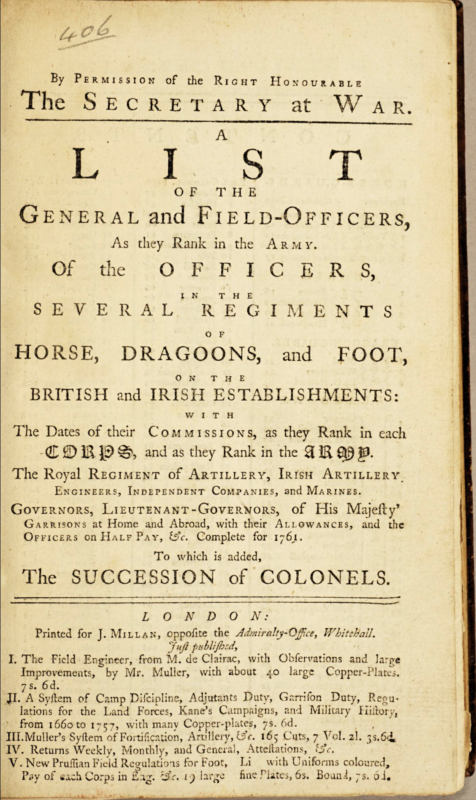
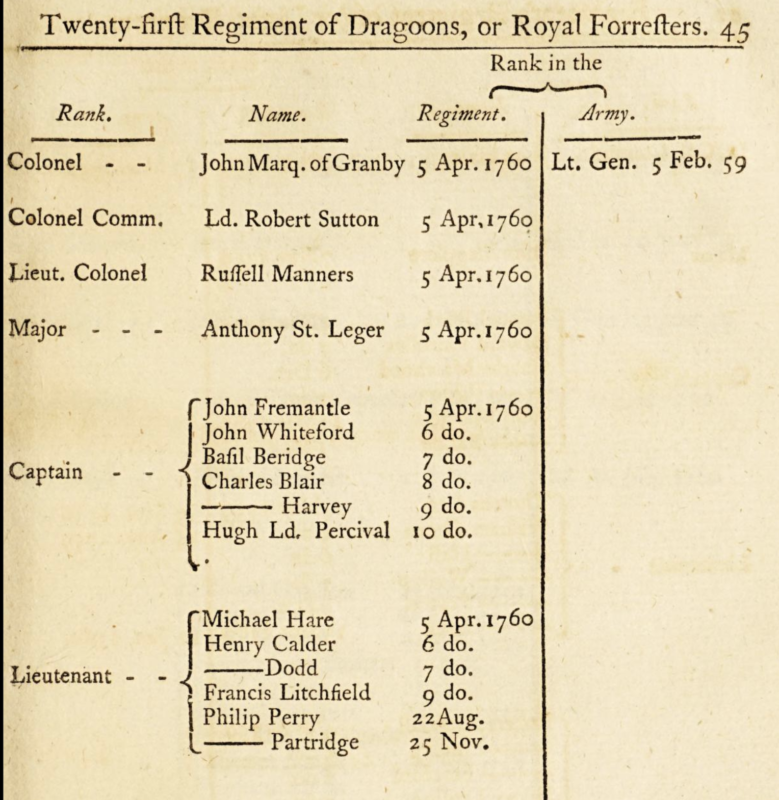
Sir William Draper was connected to Manners in several ways – and ultimately damaged his schoolfriend and military commander with an ill-conceived public defence, loyal but misguided, during the “Junius” controversy (1769–1771). Draper and Granby, both born in 1721, had been educated at Eton College, a shared formative experience that fostered enduring bonds among Britain’s governing elite. This early connection, later reinforced by their overlapping military careers, helps explain Draper’s personal sense of obligation when Granby came under sustained attack from the anonymous polemicist “Junius.”
Junius’s letters accused Granby—then a widely admired soldier and former Commander-in-Chief—of political corruption and moral weakness. Draper responded publicly, seeking to defend Granby’s honour, challenge Junius’s anonymity, and uphold the values of military service and gentlemanly integrity. However, his letters were rhetorically diffuse and lacked precision. Junius seized upon these weaknesses, dismantling Draper’s arguments with superior wit and forensic skill, and redirecting public attention toward Draper himself. Rather than vindicating Granby, Draper’s intervention exposed him to ridicule and diminished his reputation.
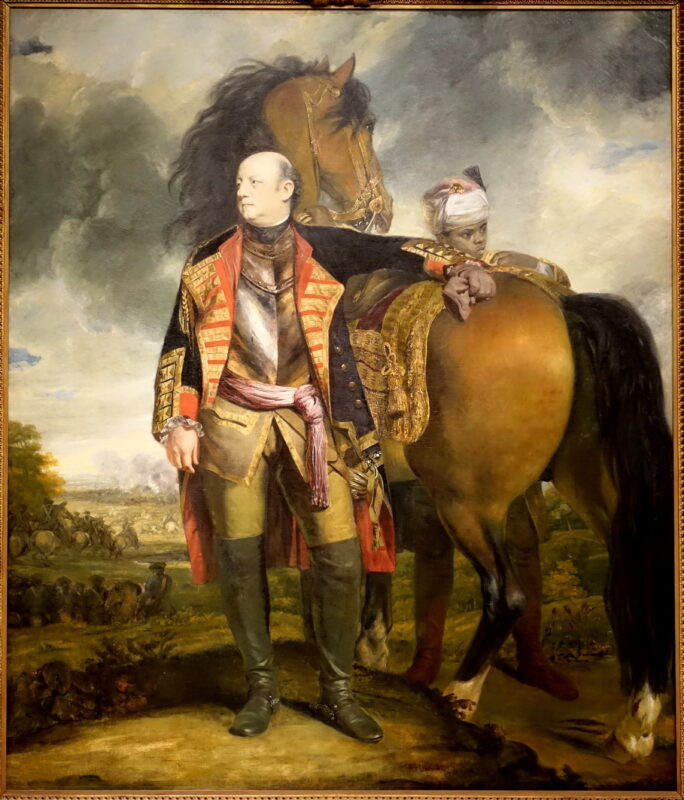
Pitt the Elder provided financial support to Granby for his 21st Regiment of Dragoons (although this short-lived regiment did not serve overseas). There is still much to work out here. Geography, family association and chronology suggest a great deal but it is a mystery why, considering Blair is not listed as a captain when marrying in 1762. The connections between the Fanes and the Pitts is also deserving of much more analysis. Towards the end of his life, Charles and Lady Blair rented Down House in Dorset from the Pitt family.
James Dreaper, in a pamphlet written for the Bristol Historical Association, suggests Charles Blair served in the “3rd Guards”:
“Sir William was also able to renew contacts with his two sisters who had continued to live in Bristol: Anne, the wife of Thomas Moore, the apothecary, who between them had produced a large family, many of whom had returned to India for further service with the East India Company; and Mary, who had first married a ‘Mr Blair of the West Indies’, presumably a plantation owner, by whom she had at least one son who became an Ensign in the 3rd Guards, and secondly a Mr Askew.” Source
Askew is clearly Thomas Ayscough (1710-c1753) who married Charles Blair’s mother. What is particularly tantalising – although hard evidence of Blair’s service in the ‘3rd Guards’ is yet to be uncovered – are entries made by James Boswell in his London Diary (1762-1763). Boswell has breakfast or dinner with “Captain Blair” half-a-dozen times and they even visited Joshua Reynold’s studio together:
“…dined at Douglas’s, where was Captain Blair. This dinner was comfortable & hearty & relieved me a good deal. Honest Blair was very good company.”
“Honest Captain Blair was with us, who is a very worthy fellow; And yet he & I very seldom meet in this great City. I went quietly home at night.”
“… dined at Douglas’s. Captain Blair was there. He is a good worthy lad. But he has not enough of imagination, and mixes too much in the common rough intercourse of Society for me. So, we are very seldom together.”
This footnote provides some extra detail about two different theories on the identity of Captain Blair. It is possible that Orwell’s great-great-grandfather knew Boswell – but far from certain. Boswell’s Blair also served in the “3rd Guards”. One of the features of Boswell’s diary for 1762-1763 is his attempts to win the patronage of the Marquess of Granby for his own commission via Elizabeth Percy, Duchess of Northumberland (1716–1776).
This is an area for further research. However, it is hard to countenance that Boswell, the inveterate name-dropper, would have not mentioned that Captain Blair was the son-in-law of the 8th Earl of Westmorland.
The 1921 Census
Many of us have been scratching our heads about Eric Arthur Blair’s entry on the 1921 census.
Why was he staying on a farm in Kent?
The 1921 Census of England and Wales was scheduled for the 24th April but industrial unrest – over two million people were unemployed – lead to it being delayed until the 19th June. Orwell’s mother, Ida Blair, is the only resident listed at the family’s Mall Chambers address on this date. Oddly, his father, R.W. Blair is not to be found anywhere on this census. The census date fell on a Sunday and Eric Blair, a student at Eton College was domiciled at Cousins Farm, Smarden. The summer holidays were still a month away.
The census document records six guests and four occupants at the property, described as a “grass farm…50 acres, practically all pasture with stream running through, small house and useful buildings, capitally situated on the main road…”. The current owner suggested that in the 1920s the property was a fruit farm with only two rooms upstairs and two rooms downstairs. He theorised that anyone coming stay – including Eric Blair – would have picked hops and fruit but may have viewed it as somewhat of a holiday treat in clean country fresh air (note the reference to ‘silk stockings’ in the video below). If this is true, it would have been Orwell’s first experience of picking hops, pre-dating the personal experiences he wrote about in his diary (25 August – 8 October 1931), fictionalised for A Clergyman’s Daughter (1935) and explored in an early article in The New Statesman (1931) where he pointed out that it was “far from being a holiday”.
Why was Orwell at this particular farm in Kent though? There were some clues to explore from the details recorded about the individuals staying at Cousins Farm on on that Sunday in June, 1921:
1. Joseph Draper 44 – a poultry farmer born in Bermondsey
2. Eva Maude Draper 41 – Joseph’s wife born in Malvern
3. Arthur Morris Wyant 55 – Joseph’s uncle born in Dean, Bedfordshire
4. George Martin Ambrose 25 – Joseph’s nephew and a poultry farmer born in Cape Town (and still resident in South Africa)
5. Emily Elizabeth Smith 40 – visitor with two children (Cuthbert 10 and Margery 2)
6. Claudius Hillsdon 49 – visitor who worked as a Travelling Representative for Vulcan Motors Co. located in Great Portland Place, London
7. Ada Hillsdon 51 – visitor and Claudius’ wife who was born Sealkote, India
8. Eric Arthur Blair 17 – visitor and student
9. Tina Howard 28 – visitor (no occupation)
10. Rose Reeve Johnson 47 – visitor (no occupation, widow)
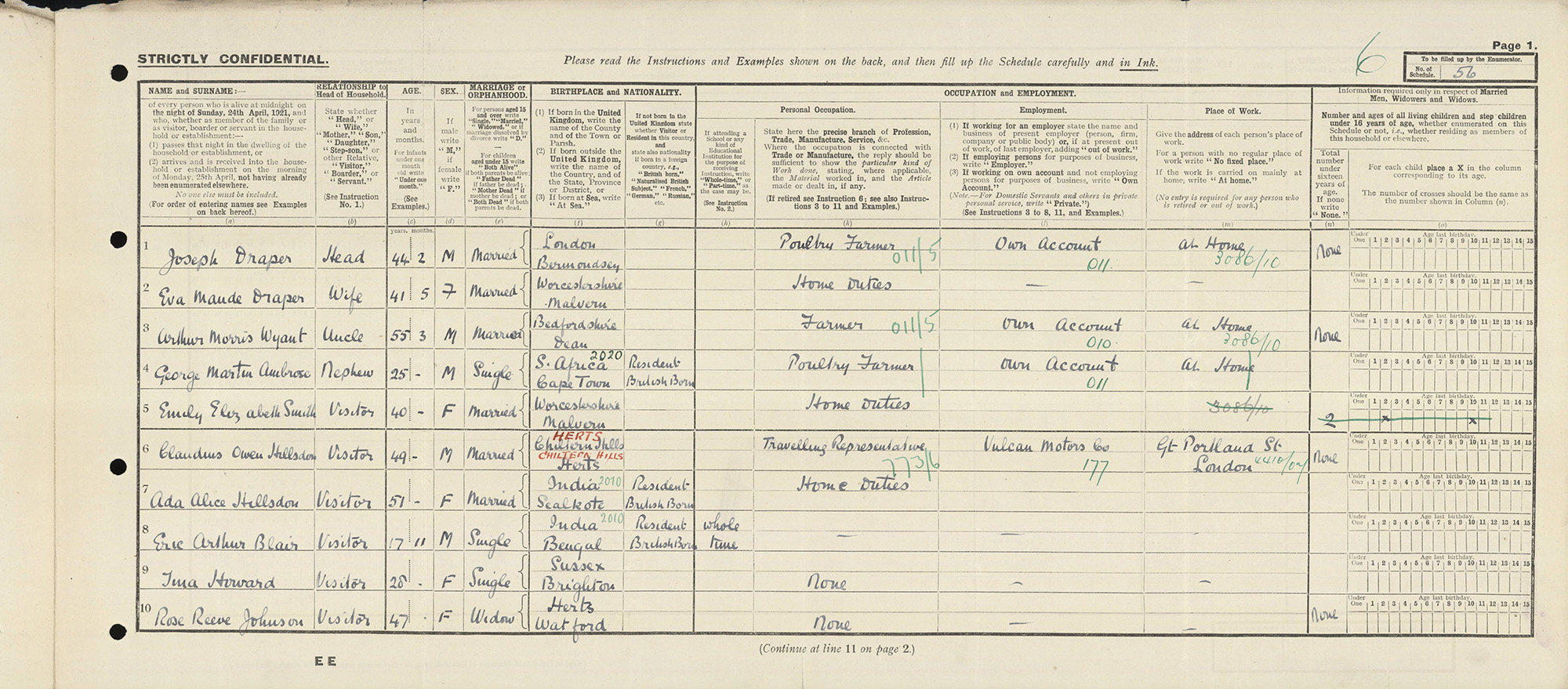
Several ideas about Blair’s connection to the property seemed obvious avenues to explore:
- Did his family have a link to Ada Hillsdon, as she was born in India?
- There were many Blair ancestral connections to Cape Town where George Ambrose had been born and still resided
- Perhaps the family were connected to Eton College somehow?
- Maybe he was being billeted after an Eton OTC bivouac?
After much effort, none proved fruitful. I suspected there must be an obvious answer if only one knew what that may have been. I accepted defeat – mostly as there were so many other research projects which would bear fruit if time was spent investigating – albeit temporarily.
Unfurling parchment in the National Archives about this court case involving Charles Blair as a minor, unexpectedly re-opened the case. How exactly (if at all) is Joseph Draper – a poultry farmer who becomes a butler towards the end of his life – connected to Orwell’s great-great-great-grandmother, Mary Draper-Blair-Ayscough?
Reflections
“Family background and family history play a part in the making of any writer, however rigorously he himself may suppress overt references to them. In Orwell such references are not frequent, but one has a sense of continuity, of parallels and foreshadowings reaching into an earlier age, of family styles and attitudes that presage the kind of writer he was to become. Or to put it another way, if Eric Blair as George Orwell is the most considerable of the Blairs, the culmination of a line, it is neither startling nor incongruous that it should be so. A glance at the history of the family will confirm this.”
………………………………………………………Peter Stansky & William Abrahams, The Unknown Orwell (1972)
There are many sources indicating Orwell’s emotional connection to his aristocratic forebears (see here and here). Tosco Fyvel noted in his memoir of Orwell that the Blair family’s social status was evident in the late eighteenth-century family bible whose inside covers contained the detailed tree outlining “the descendants of Charles Blair, Esq., and Lady Mary Blair (Fane) to whose children their uncle, the Earl of Westmorland, stood godfather”:
“As I looked down the list of generations in this family bible (which I think I was the first of Orwell’s friends to see) it became apparent that Orwell’s ‘dreary’ Comstock family with its working-class origin in Keep the Aspidistra Flying was no direct portrait of the Blairs. On the contrary, the Blairs resembled that other English social phenomenon which Bernard Shaw called an upper-middle-class ‘downstart’ family, with younger sons slipping successively a little down the social scale, but making it not so strange for Orwell to go to Eton on a scholarship.” (George Orwell: A Personal Memoir)
Ancestral family portraits were hanging on his wall in 1946 when Vernon Richards, the Anglo-Italian anarchist, photographed Orwell at home in his Islington flat. It is not possible to identify with certainty which Blairs adorned his otherwise spartan abode at this time but the portrait of Lady Mary Blair née Fane he owned has now been located (more on this anon). The portrait in the background of this photograph by Richards may possibly be Charles Blair who was painted by Thomas Beach several times. It must have been inherited by one of Orwell’s relatives but as yet has not been located.
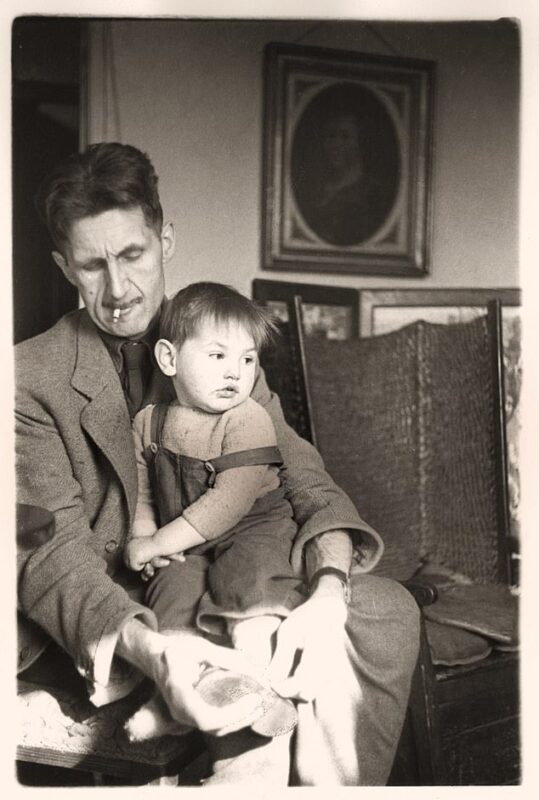
One item of trivia: Sir William Draper’s cousin, Daniel Draper (1726-1785), was an East India Company official whose wife, Eliza Draper née Sclater (1744-1778), scandalised the colony. Eliza was immortalised in A Sentimental Journey Through France and Italy (1768) and Letters from Yorick to Eliza (1775) by the novelist Laurence Sterne who was utterly obsessed with her charms. It is quite a literary tale.
Eliza had been born on the Malabar Coast where she met her future husband, who was stationed at Tellicherry, an important strategic asset for maintaining the East India Company’s power. She married aged 14 in 1758. One assumes that Orwell knew of the rebellion in this region against the British in the 1920s which led him to appropriate the place-name for his novel, Nineteen Eighty-Four:
“We don’t all have the privilege of fighting in the front line, but at least we can all keep fit. Remember our boys on the Malabar front!”
It is striking to note that Eliza, like Charles Blair’s grandmother, Mary Harrison Draper, died at Sir William Draper’s Manilla House estate at Clifton. What family stories were passed on? One would imagine the connection between Eliza and Sterne might have rated a mention down the generations.
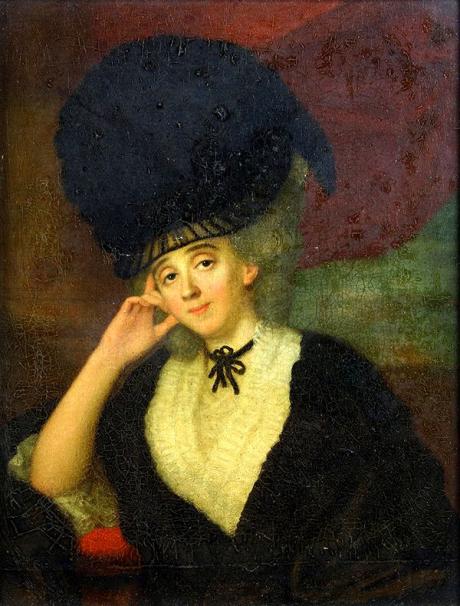
This one scroll of parchment from December 1754 provided tantalising new research leads. The fact that Charles Blair attended Eton College is particularly significant. As is the new knowledge about the Drapers, another ancestral Anglo-Indian family connection. If it can be established that the Drapers living near Smarden in 1921 were Orwell’s relatives, it is yet more evidence of the strong family connection with past generations already suggested by their fondness for ancestral portraits.
One wonders, what else is “in front of one’s nose” which would enhance the sense of the “continuity, of parallels and foreshadowings reaching into an earlier age” that Stansky and Abrahams suggested over fifty years ago?
REFERENCES
Admiralty Office, Whitehall, A List of the General and Field-officers, as they Rank in the Army…, London: J. Millan, 1761
Austen-Leigh, R.A., The Eton College Register: 1753-1790, Eton: Spottiswoode, Ballantyne & Co., Ltd., 1921
Baetjer, Katharine, British Paintings in The Metropolitan Museum of Art, 1575-1875, Yale University Press, 2010
Boswell, James, London Journal 1762-1763, London: Penguin Classics, 2015
Cormack, Malcolm. “The Ledgers of Sir Joshua Reynolds”, The Volume of the Walpole Society, Vol. 42, 1968, pp. 105–69.
Dreaper, James, Bristol’s Forgotten Victor: Lieutenant-General Sir William Draper K.B. (1721-1787), Bristol Historical Association, 1998
Dreaper James, Pitt’s ‘Gallant Conqueror’, London and New York: I.B. Tauris, 2006
Dreaper, James, “Draper, Sir William (1721–1787), army officer”, Oxford Dictionary of National Biography, 2008. Oxford University Press
Hall, Catherine, Draper, Nicholas, McClelland, Keith, Donington, Katie and Lang, Rachel, Legacies of British Slave-Ownership: Colonial Slavery and the Formation of Victorian Britain, Cambridge: Cambridge University Press, Kindle edition, 2014
Kent & Sussex Courier, 8 October, 1902
Lawson, C. C. P. ‘The 21st Light Dragoons (The Royal Foresters), 1760–1763’, Journal of the Society for Army Historical Research, Vol. 28, No. 116, Winter 1950, pp. 143–144. JSTOR, https://www.jstor.org/stable/44222039
Manners, Walter Evelyn, Some Account of the Military, Political, and Social Life of John Manners, Marquis of Granby, London & New York: Macmillan, 1899
Mannings, David, Sir Joshua Reynolds: A Complete Catalogue of His Paintings (Volumes 1 & 2), New Haven: Yale University Press, 2000
National Archives (UK), ‘Blair v Drake: Bill and Answer, Court of Chancery’, C 11/204/18. Available online at https://discovery.nationalarchives.gov.uk/details/r/C10423204
Orwell, George, A Clergyman’s Daughter, 1935
Orwell George, George Orwell in Kent: Hop-Picking, Bridge Books: Kent Edition, 1970
Sclater, William Lutley, Sterne’s Eliza; some account of her life in India: with her letters written between 1757 and 1774, London: W. Heinemann, 1922
Stansky, Peter and Abrahams, William, The Unknown Orwell, New York: Alfred A. Knopf, 1972
UCL Department of History, ‘Charles Blair senior,’ Legacies of British Slave-Ownership Database, Centre for the Study of the Legacies of British Slave-Ownership, University College London. Available online at https://www. ucl. ac.uk/lbs/person/view/2146636746
Walpole, Horace, Memoirs of the Reign of King George the Third, London: Lawrence and Bullen, 1894

Discover more from Darcy Moore
Subscribe to get the latest posts sent to your email.